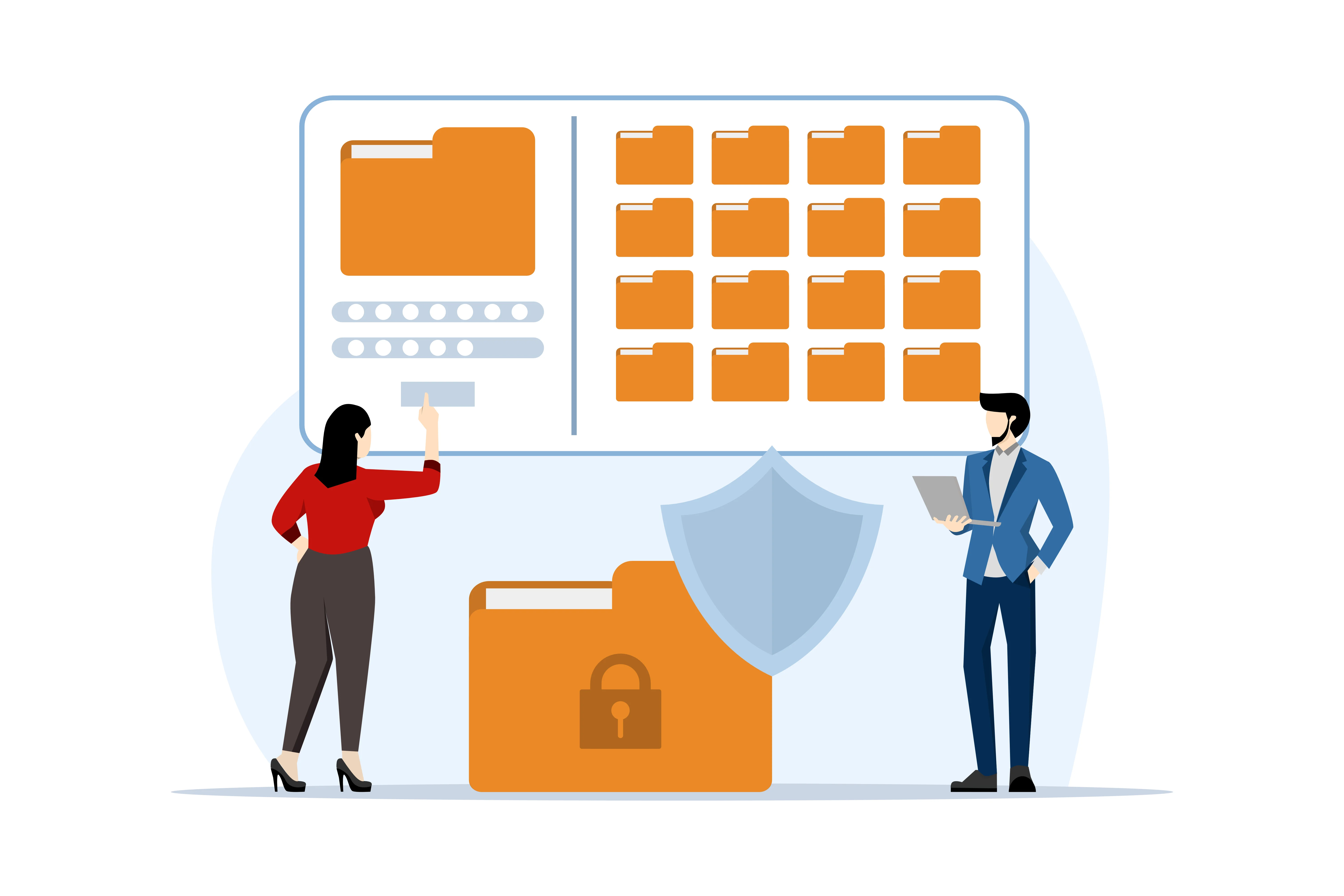

A clear, straightforward guide for founders, IT leads, and anyone seeking practical security advice on Zero Trust what it means, how it works, and whether your business needs it.
Recently, a company’s security plan was straightforward. They created a strong barrier using firewalls, VPNs, and access badges. They believed that everything inside this barrier was secure.
That model is now obsolete. Remote work shattered the perimeter. Cloud infrastructure scattered data across dozens of services. Employees log in from coffee shops, personal laptops, and phones that may or may not have been updated in months. The old assumption that location equals trust no longer holds.
Zero Trust security was built specifically to replace it. And if your business handles anything sensitive whether customer records, financial data, or internal communications it is worth understanding not just what Zero Trust is, but why the shift matters and how to tell whether you actually need it right now. The Canadian Centre for Cyber Security and the NIST Cybersecurity Framework both provide authoritative guidance on Zero Trust principles.
The Problem with “Trust But Verify”
In traditional network security, there was a simple rule: once you got past the network’s outer defences, you could access everything inside. After logging in to the VPN or connecting to the corporate network, users could move around freely with few restrictions.
Many major security breaches happen quietly. Instead of forcing their way in, attackers look for weak points and slip inside unnoticed. The 2020 SolarWinds attack is a clear example malicious code entered through a trusted software update. Since the affected systems were already within the network, the attackers could move around undetected for months.
Zero trust changes the way we think about security. Its main idea is simple: don’t trust anyone or anything automatically, no matter where they are or how they got there.
What Is Zero Trust Security?
Zero trust is not a product you can buy it is a way of thinking about security. John Kindervag introduced the term at Forrester Research around 2010. Since the rise of remote work during the pandemic, more people have adopted this approach.
The guiding principles can be distilled into three practical ideas:
Verify explicitly: Always authenticate and authorize based on all available signals identity, location, device health, the service being accessed, and behavioural patterns.
Use least privilege access: Limit user access to only what they need for their current task. Permissions are narrow and time-bound, not broad and permanent.
Assume breach: Design systems as if an attacker is already inside. Minimize blast radius, segment access tightly, and encrypt everything end-to-end.
How Zero Trust Actually Works in Practice
Identity as the new perimeter
In a Zero Trust model, your identity becomes the primary control point. It is confirmed through multi-factor authentication, device certificates, and behavioural signals. Access is not granted because you are on the company network it is granted because you can prove, right now, that you are who you claim to be.
Micro-segmentation
Rather than a flat network where everything can talk to everything else, Zero Trust environments are carved into small, isolated segments. A marketing employee who logs into a campaign tool has no access to the engineering team’s code repositories. Each segment is walled off, and moving between them requires explicit authorization every time.
Continuous monitoring and adaptive access
Zero trust does not just check credentials at login and walk away. It watches behaviour throughout a session. If a user who normally logs in from Vancouver suddenly starts pulling large files from a server they have never accessed before at 2 AM, the system can automatically flag or block that activity.
Device health checks
Access decisions also factor in the device itself. Is the operating system patched? Is endpoint protection running? A user with valid credentials on an unpatched personal laptop may be blocked or restricted until their device meets compliance requirements.
Why Businesses Are Moving Toward Zero Trust Now
Several forces converged to make Zero Trust less optional and more urgent over the last few years.
The shift to cloud has been the biggest driver. When your applications run on AWS, Azure, or Google Cloud, the old perimeter no longer applies. Data flows across SaaS platforms, APIs, microservices, and third-party integrations in ways that a traditional firewall was never designed to handle.
Remote and hybrid work added another layer of complexity. Employees now access corporate resources from home networks, shared workspaces, and mobile devices that IT has no control over.
Regulatory pressure is also intensifying. Frameworks such as GDPR, HIPAA, and the NIST Cybersecurity Framework increasingly require organizations to demonstrate granular access controls and audit trails.
Does Your Business Actually Need Zero Trust?
Here is where the conversation often gets oversimplified. If you run a five-person startup with a simple tool stack and no sensitive customer data, you probably do not need a full Zero Trust architecture right now. Good password hygiene, MFA on every account, and careful SaaS access management will serve you well at that scale.
But if several of the following apply to your business, Zero Trust deserves serious attention:
- You handle sensitive customer data medical records, financial information, or personal identifiers
- You operate in a regulated industry requiring granular access controls and audit logging
- Your team is distributed, with employees, contractors, or third-party vendors accessing systems remotely
- You use a mix of cloud services, SaaS tools, and on-premise systems
- You have had a security incident that exposed gaps in how access is controlled
Common Misconceptions Worth Clearing Up
“Zero Trust means zero convenience.” Well-implemented Zero Trust is actually less disruptive than it sounds. Single sign-on, adaptive MFA that only challenges users when something looks unusual, and device trust certificates mean that verified employees on managed devices move through their workday with minimal friction.
“We need to replace everything to adopt Zero Trust.” Zero trust is a journey, not a single deployment. Most organizations adopt it incrementally starting with identity and MFA, then layering in device management, then tackling network segmentation over time.
“Zero Trust is only for enterprises.” The principles apply at any scale. A ten-person accounting firm storing client financial data has just as much reason to limit lateral movement and enforce least-privilege access as a Fortune 500 company.
Where to Start if You Are Considering Zero Trust
The most practical starting point is auditing what you already have. Map who has access to what, and ask whether those access levels still make sense. You will likely find former employees still active in systems, contractors with permissions broader than their roles require, and shared credentials that have not been rotated in years.
From there, enforce multi-factor authentication everywhere it is not already active. This single step eliminates a significant portion of credential-based attacks before you have done anything else.
Then evaluate your identity provider. Tools like Okta, Azure AD, and Google Workspace’s identity platform all offer Zero Trust-aligned features that many organizations already pay for but do not fully use. Our IT infrastructure team can audit your current identity setup and recommend the next step.
Network segmentation and endpoint management come next and these require more investment in tooling and configuration, but they are the components that genuinely contain damage when something eventually goes wrong.
Conclusion
Zero Trust Security is not just a product or a trendy term. It is a practical approach to the changing threat landscape. The main idea is simple: you cannot protect what you automatically trust. For businesses that handle important data in a more distributed environment, this approach is essential.
Start with the basics identity, MFA, and least privilege access and build from there. The architecture does not have to be complete to be valuable. Every layer you add narrows the window an attacker has to work with, and in security, that is the whole game.